Global


What does cleaning mean in a cleanroom?
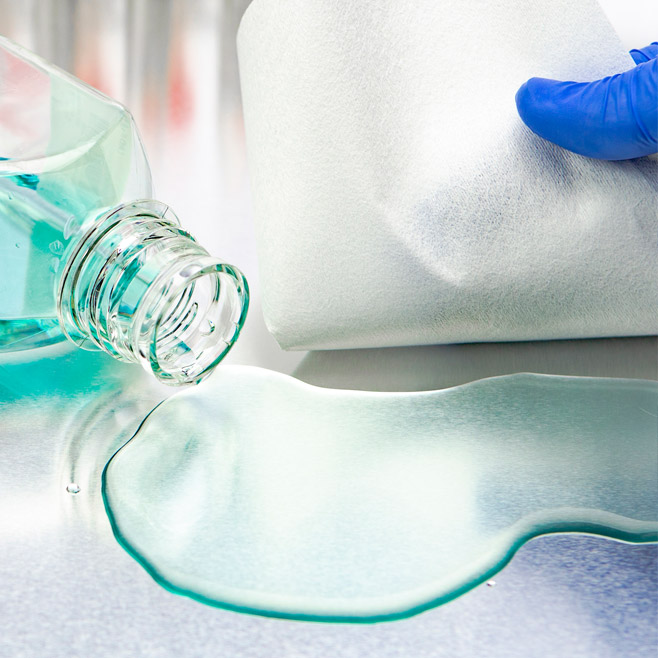
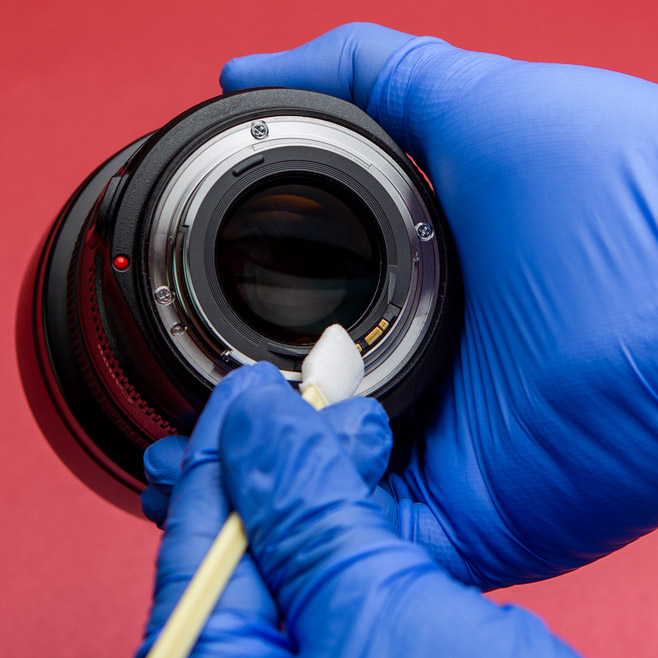
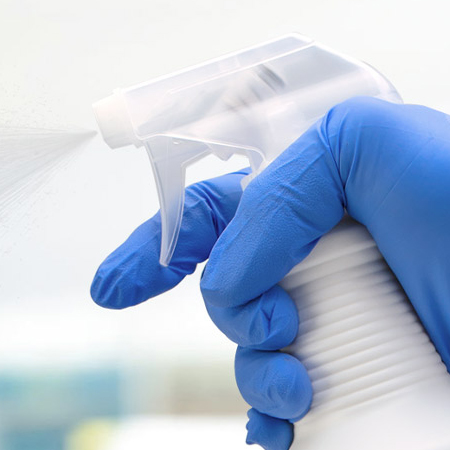
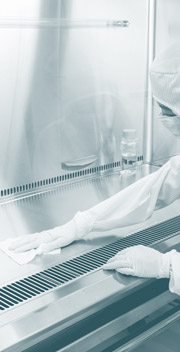
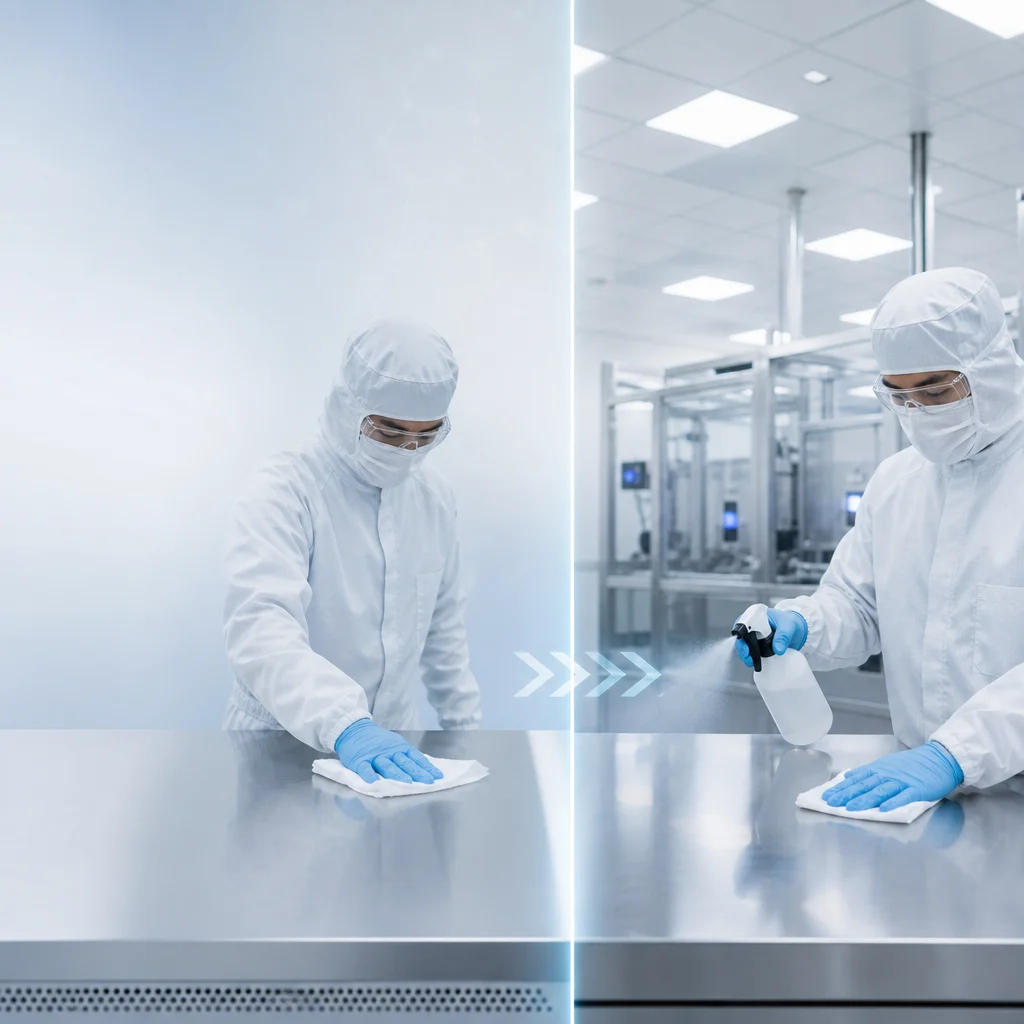
Cleaning is the physical removal of visible dirt, dust, debris, oils, residues, particles, and other contaminants from the surface. Cleanroom cleaning typically uses water, a detergent, or a specialized cleaning agent together with wiping, scrubbing, or mopping. Cleaning can reduce microorganisms by removing them from the surface, but it does not necessarily kill or inactivate them.
What does disinfecting mean in a cleanroom?
Disinfecting uses an appropriate chemical disinfectant to kill or inactivate specified microorganisms, such as bacteria, fungi, and certain viruses, on a surface. Disinfection is generally performed after cleaning because dirt, residues, and organic matter can interfere with disinfectant performance.
Why should you clean a cleanroom surface before disinfecting it?
Soil, residue, and organic matter can shield microorganisms or prevent the disinfectant from contacting the entire surface. If the surface is not adequately cleaned, the disinfectant may be less effective. In cleanrooms and other controlled environments, cleaning before disinfection supports both particle control and effective microbial control. Always follow the facility’s approved procedure.
Can you disinfect a cleanroom surface without cleaning it first?
Always follow the facility’s approved procedure and the disinfectant manufacturer’s label or instructions for use. Some products may be suitable for pre-cleaned or lightly soiled surfaces, but visible soil and organic residue can interfere with disinfectant performance. In regulated or critical environments, cleaning before disinfection is generally recommended unless the approved procedure and product instructions state otherwise.
Does cleaning kill microorganisms in a cleanroom?
Most cleaning products are designed to remove contamination rather than kill microorganisms. Cleaning can significantly reduce microbial contamination through physical removal but use an appropriate disinfectant when microbial inactivation is required.
Does disinfecting remove dirt, residue, and particles?
Not necessarily. A disinfectant is intended to kill or inactivate specified microorganisms according to its claims and instructions; it may not remove dirt, residue, or particles. A surface can therefore be disinfected but still visibly contaminated if it was not cleaned first.
Is disinfecting the same as sterilizing?
No. Disinfection reduces or inactivates specified microorganisms on surfaces according to the product’s claims and instructions. Sterilization is a separate validated process intended to eliminate all forms of microbial life. The required approach depends on the facility, application, and approved procedures.
What are the steps for cleaning and disinfecting a cleanroom surface?
For most critical environments, follow the facility’s approved procedure and use this general sequence:
1. Clean the surface to remove dirt, residues, and particles.
2. Disinfect the surface with an appropriate product and follow the manufacturer’s specified contact time and application instructions.
3. Keep the surface visibly wet for the full contact time required by the product label or instructions for use.
Why are cleaning and disinfecting important in cleanrooms?
Cleanrooms require control of both nonviable particles and viable microorganisms.
Cleaning helps reduce particles and residues that can impact product quality.
Disinfecting helps control microorganisms that may compromise product safety, sterility, or process integrity.
Together, cleaning and disinfection form key parts of a documented contamination control strategy.
Which Berkshire products support cleanroom cleaning and disinfection?
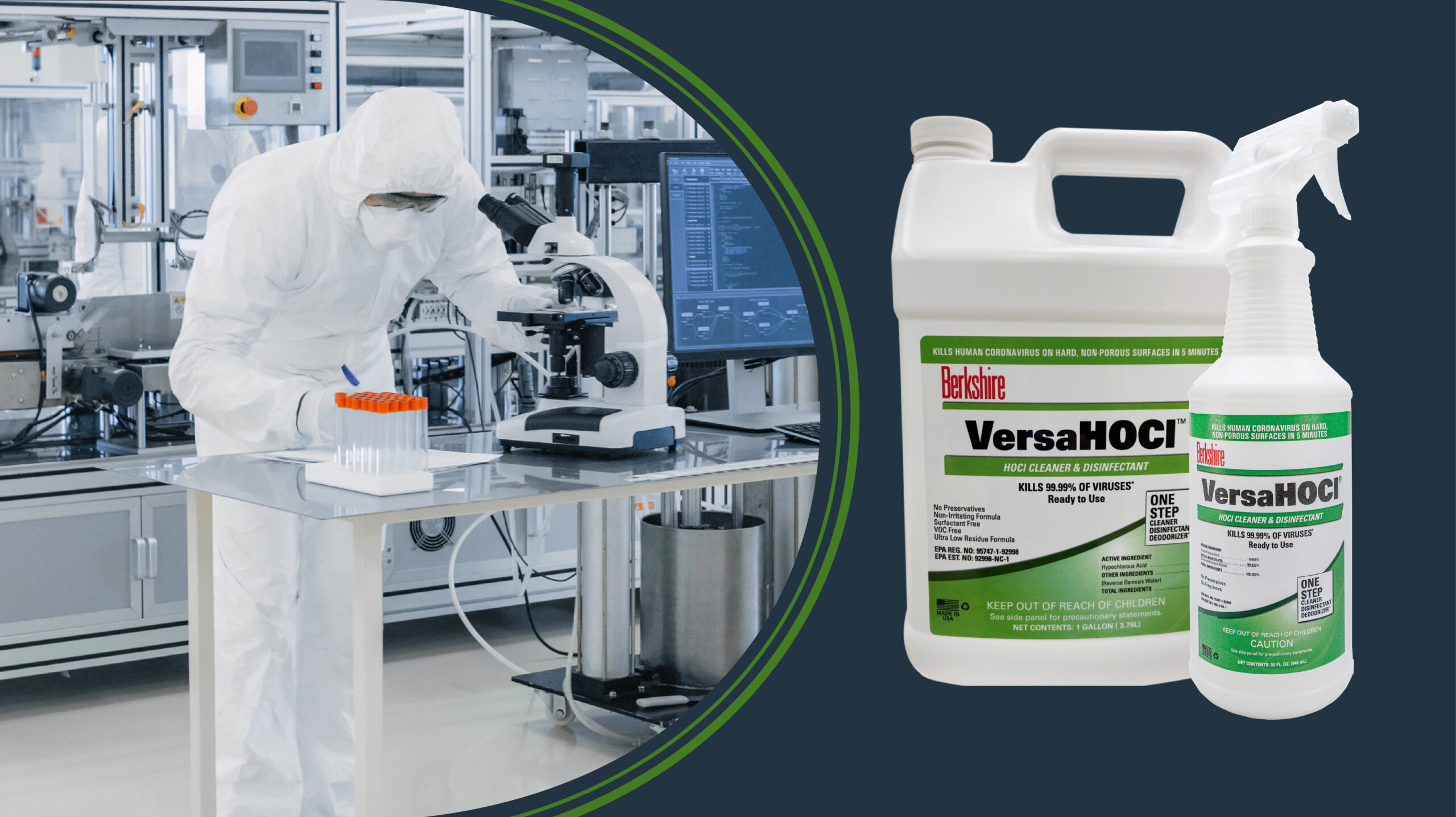
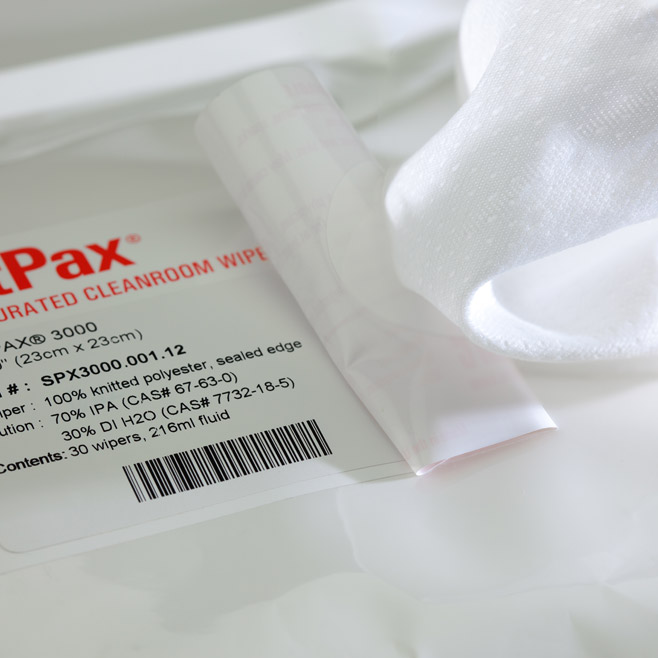
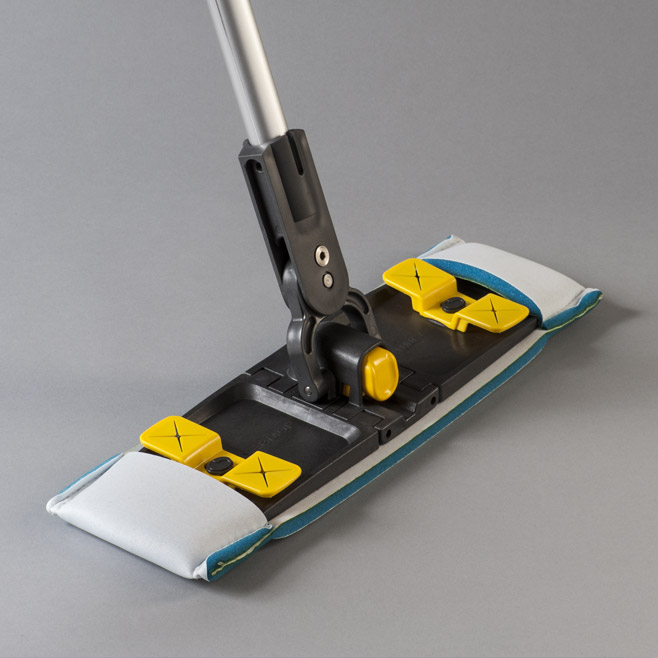
Berkshire supports cleanroom cleaning and disinfection programs with cleanroom wipes, mops, and cleaning tools designed for controlled environments. Berkshire also offers cleaning and disinfectant solutions, including the SatPax® IPA, DuoClean®, VersaHOCl® and VersaQuat® products to support facility-specific microbial control programs. Product selection should consider the surface, target microorganisms, required contact time, cleanroom classification, material compatibility, and the facility’s approved procedures.