Global















Quick Answer: Which Cleanroom Product Should I Choose?
Choose a critical-use cleanroom product when your process involves high contamination risk, strict documentation requirements, regulated manufacturing, sensitive surfaces, aseptic workflows, sterility needs, or highly controlled environments.
Choose a value-focused cleanroom product when the application is lower risk, more routine, less documentation-intensive, and the priority is dependable performance at a more cost-conscious price point.
The best choice is not always the most expensive product. It is the product that fits the cleanliness level, application risk, documentation expectations, and total cost requirements of your facility.


Critical-Use vs. Value-Focused Products: At-a-Glance Comparison
|
Selection Factor |
Critical-Use Products |
Value-Focused Products |
|
Best fit |
High-risk or highly controlled applications |
Routine or lower-risk applications |
|
Typical priority |
Contamination control, consistency, documentation, process assurance |
Cost efficiency, dependable performance, fit-for-purpose use |
|
Common environments |
More stringent cleanrooms, regulated processes, sensitive workflows |
Less critical cleanroom areas, support areas, general controlled environments |
|
Documentation needs |
Higher |
Moderate to lower |
|
Sterility needs |
Often relevant depending on application |
Less commonly required |
|
Cost profile |
Higher upfront cost, often justified by risk reduction |
Lower purchase cost, designed for budget-conscious use |
|
Main buying question |
“What level of assurance does this process require?” |
“What product provides dependable performance without over-specifying?” |
Frequently Asked Questions
What is the difference between critical-use and value-focused cleanroom products?
Critical-use cleanroom products are designed for applications where consistency, documentation, contamination control, and process reliability are especially important.
Value-focused cleanroom products are designed for applications where dependable performance is still required, but the task may allow for a more cost-conscious option.
The difference is not simply quality. It is the level of assurance required by the application.
When should I choose a critical-use cleanroom product?
Choose a critical-use product when the application involves:
- Regulated manufacturing
- Aseptic processing
- Sensitive surfaces or materials
- High contamination risk
- Strict documentation requirements
- Sterility expectations
- High-value production
- Processes where variation could affect quality or compliance
Critical-use products are often selected when the cost of failure, rework, contamination, or process disruption is high.
When should I choose a value-focused cleanroom product?
Choose a value-focused product when the application is lower risk, more routine, or less documentation-intensive.
Value-focused products may be appropriate for:
- General cleanroom wiping
- Support areas
- Lower-criticality cleaning tasks
- Budget-sensitive operations
- Applications where premium documentation or sterility is not required
- Environments where fit-for-purpose performance is more important than maximum assurance
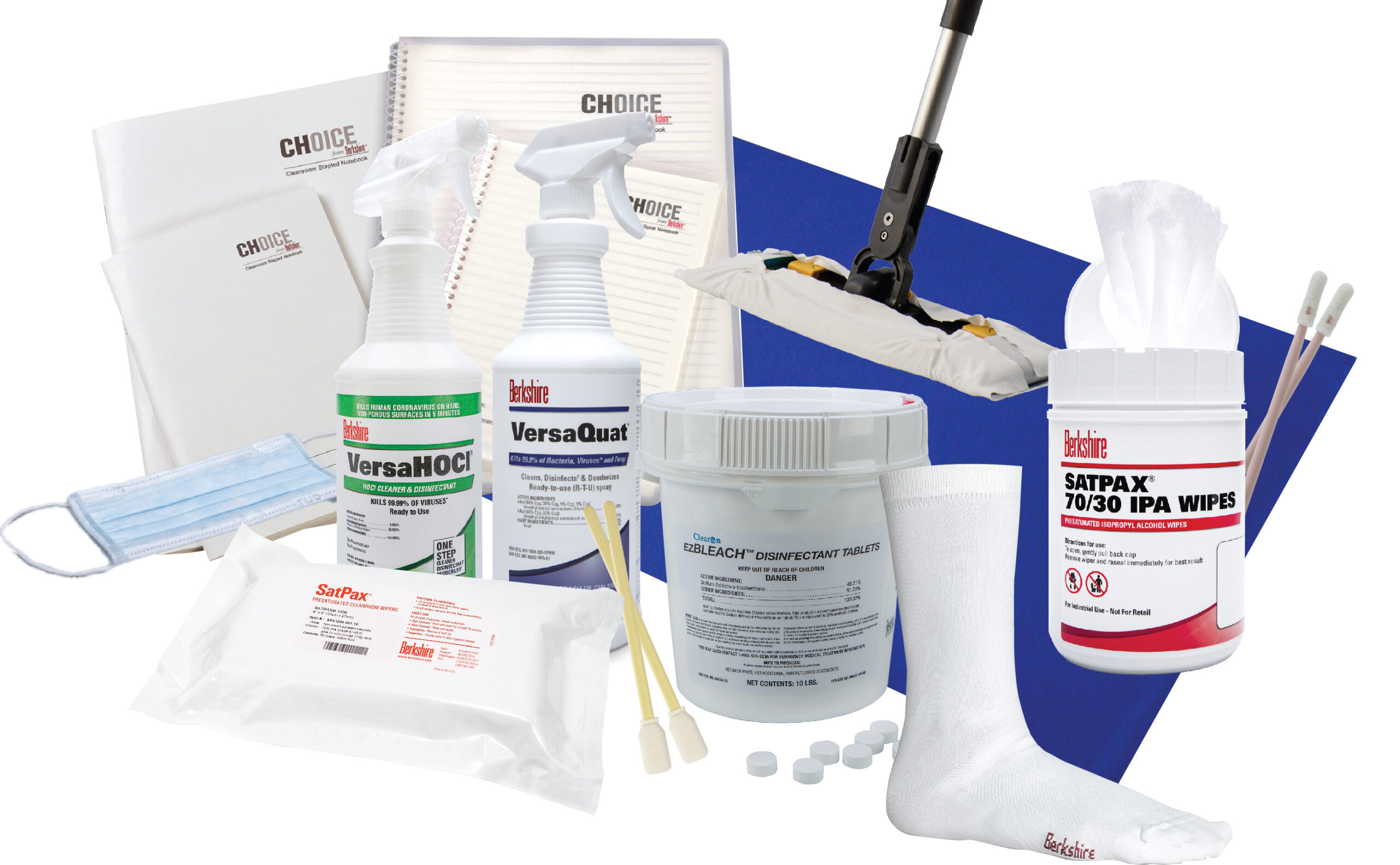
Berkshire’s Choice® and Pro-Wipe® product lines are examples of value-focused options designed to support dependable performance for appropriate applications.
Does value-focused mean lower quality?
No. Value-focused does not mean poor quality.
It means the product is designed for applications with a different balance of performance, documentation, risk, and cost requirements.
The goal is to avoid both over-specification and under-specification. A value-focused product can be the right choice when it fits the task, environment, and process requirements.
How does ISO classification affect cleanroom product selection?
ISO classification helps determine how tightly controlled the cleanroom environment must be.
As cleanliness requirements become more stringent, buyers typically place greater emphasis on:
- Particle control
- Residue control
- Product consistency
- Packaging configuration
- Sterility, when required
- Documentation and traceability
- Compatibility with controlled environments
However, ISO class alone should not determine the product. The correct choice also depends on the application, surface, cleaning task, regulatory expectations, and internal quality requirements.
Are critical-use products always required in ISO-classified cleanrooms?
No. Not every ISO-classified cleanroom requires the highest-assurance product for every task.
The right product depends on the risk of the activity being performed. For example, a direct product-contact or aseptic application may require a higher-assurance product, while a lower-risk support task in the same facility may allow a value-focused option.
Product selection should be based on both the cleanroom classification and the actual use case.
How do I know if I am over-specifying a cleanroom product?
You may be over-specifying if the product provides a level of assurance, documentation, sterility, or performance that exceeds the actual needs of the application.
Signs of over-specification may include:
- Using premium products for low-risk tasks
- Paying for documentation that is not required
- Selecting sterile products where sterility is not needed
- Using high-performance materials in areas where a lower-cost alternative would perform adequately
- Applying one product standard across all areas without considering task risk
Over-specification can increase cost without improving process outcomes.
How do I know if I am under-specifying a cleanroom product?
You may be under-specifying if the product does not provide the consistency, cleanliness, documentation, or compatibility required for the environment.
Signs of under-specification may include:
- Excessive wiping or product usage
- Residue concerns
- Particle or fiber issues
- Inconsistent cleaning results
- Rework
- Audit or documentation gaps
- Product compatibility concerns
- Higher risk of process disruption
Under-specification can create hidden costs that exceed the initial savings from a lower purchase price.
What factors should I compare besides price?
Price is important, but it should not be the only selection factor.
When comparing cleanroom products, evaluate:
- Application risk
- ISO class or cleanliness requirement
- Particle and residue performance
- Absorbency
- Durability
- Surface compatibility
- Sterility requirements
- Packaging format
- Documentation availability
- Traceability
- Ease of use
- Consumption rate
- Total cost in use
The best product is the one that supports the process effectively at the appropriate cost level.
What is total cost in use?
Total cost in use is the full operational cost of using a product, not just the purchase price.
It may include:
- How many wipes or consumables are needed per task
- How much time the cleaning process requires
- Whether the product reduces rework
- Whether it supports process consistency
- Whether it creates waste or inefficiency
- Whether it meets documentation requirements
- Whether it helps reduce contamination risk
A lower-cost product may be the right choice in some applications. In others, a higher-assurance product may provide better overall value by reducing risk, improving efficiency, or supporting compliance.
Can a lower-cost cleanroom product still perform well?
Yes. A lower-cost cleanroom product can perform well when it is properly matched to the application.
The key is to choose based on fit, not price alone. A value-focused product may be the best choice when the application does not require the highest level of documentation, sterility, or contamination control.
Can Berkshire help me choose the right product tier?
Yes. Berkshire can help evaluate the application, environment, documentation requirements, risk level, and budget priorities to determine whether a critical-use or value-focused product is the better fit.
This helps customers avoid unnecessary over-specification while reducing the risk of selecting a product that does not meet the needs of the process.
How does Berkshire support customers trying to control costs?
Berkshire helps customers control costs by matching products to the actual requirements of the application.
Instead of automatically recommending the highest-specification option, Berkshire can help identify where a critical-use product is necessary and where a value-focused product may provide dependable performance at a more efficient cost.
This approach supports better buying confidence, improved product fit, and smarter cleanroom consumables management.
What is the best way to get started?
Start by reviewing four areas:
- Environment: What ISO class or cleanliness level applies?
- Application: What task is being performed?
- Risk: What happens if the product does not perform as expected?
- Documentation: What quality, compliance, or traceability requirements apply?
Once these factors are understood, Berkshire’s technical team can help recommend products that align with both performance needs and budget expectations.

Decision Guide
Use this guide as a starting point:
Choose critical-use products when:
- The application is high risk
- The process is regulated
- Sterility may be required
- Documentation is important
- Surface sensitivity is high
- Rework or contamination would be costly
- Product consistency is essential
Choose value-focused products when:
- The application is lower risk
- The task is routine
- Budget control is a priority
- Extensive documentation is not required
- Sterility is not needed
- The environment allows more product flexibility
- Fit-for-purpose performance is sufficient