
 Global











Cleaning & Disinfection, Cleanroom News, Knowledge Base
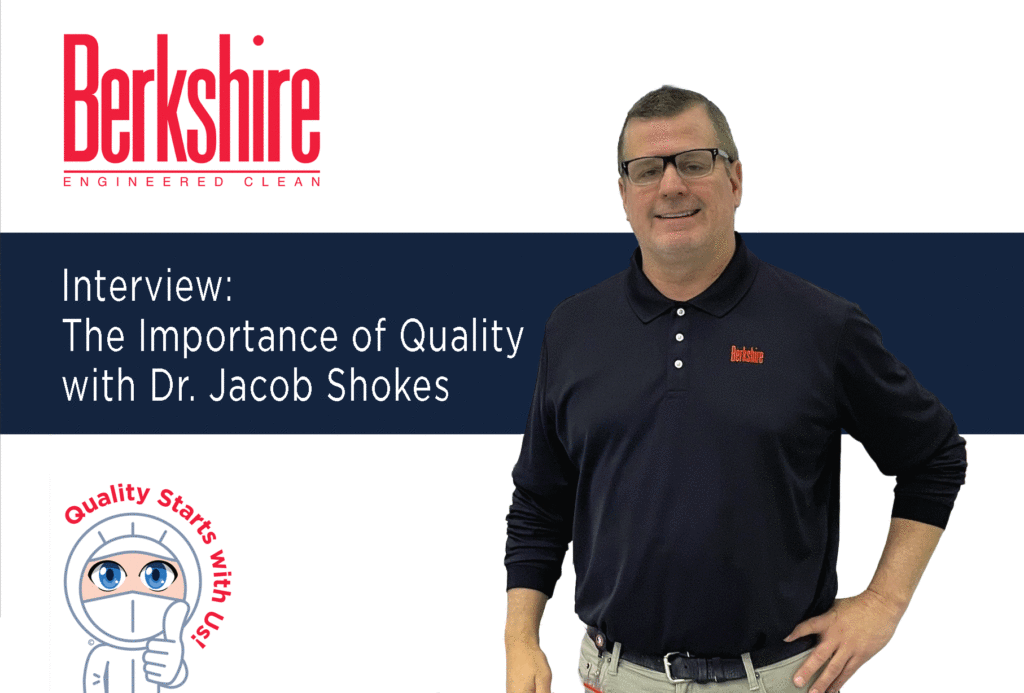
Interview: The Importance of Quality with Berkshire’s Director of Quality Assurance, Dr Jacob Shokes
Dec
A candid conversation with Jacob Shokes, Director of Quality Assurance, on the importance of quality in the pharmaceutical industry
To conclude our series of articles on the importance of quality, which has explored topics such as process improvement and customer satisfaction, we thought it would be great to have a conversation with Berkshire’s Director of Quality Assurance, Dr. Jacob Shokes. Jacob has over 20 years of experience leading quality assurance in the food, nutrition, and pharmaceutical sectors and has led several successful initiatives that have improved our standards. In this final piece, we asked Jacob a few questions about the importance of quality, why it matters, and what the future of quality looks like, providing readers with insights from his extensive expertise and experience.
Interviewer: Jacob, thanks for taking the time to talk with us about the importance of quality. As Berkshire’s Director of Quality Assurance, to start, could you share why you think quality matters at Berkshire?
Jacob Shokes: Absolutely. At Berkshire, quality serves as the cornerstone of our operations, supporting enhanced customer satisfaction and loyalty, strengthening our brand reputation, and ensuring the long-term durability of our products. In a highly competitive market, our distinction lies in providing the highest quality, engineered-clean solutions alongside an exceptional customer experience.
Interviewer: That makes sense. Specifically, why is quality so important for pharmaceutical cleanrooms?
Jacob: Ensuring quality in pharmaceutical cleanrooms is essential to protecting drug safety, efficacy, and consistency, helping prevent costly recalls and regulatory complications. Furthermore, consistently high-quality products enhance a company’s reputation and establish a competitive advantage by fostering trust among the public and healthcare professionals.
By Interviewer: Those are excellent points. Thank you. You highlight the importance of preventing contamination that could lead to expensive recalls or regulatory issues. With that in mind, can you explain how Berkshire’s cleanroom wipers play a role in this?
Jacob: Certainly. The high-quality wipers produced by Berkshire play an essential role in safeguarding pharmaceutical cleanrooms by ensuring these environments remain safe and sanitary. Unlike standard commercial alternatives, our wipers are engineered to prevent fiber shedding, residue deposition, and microbial contamination, while adhering to rigorous industry standards. This commitment to quality assures our customers of reliable contamination control and regulatory compliance.
Interviewer: Berkshire’s commitment to product quality is clear from what you’ve shared so far. Could you tell me more about how quality affects operational efficiency—such as production speed or cost savings—and how it reduces risk for Berkshire?
Jacob: Maintaining high-quality operations enables us to minimize defects, rework, and waste, resulting in reduced production costs and enhanced productivity. Consistent quality also mitigates risks by ensuring our procedures adhere to established standards, which helps prevent costly errors, customer complaints, and regulatory issues. At Berkshire, we recognize a strong correlation between exceptional quality and greater operational efficiency.
Interviewer: Thanks, Jacob. Those are excellent correlations. Of course, working in quality comes with its own set of challenges. Can you share an example of a difficult quality challenge you encountered and how you addressed it?
Jacob: Yes, microbiological and physical contamination are ongoing challenges in all consumable products. These problems can threaten consumer health and safety, potentially leading to serious illness or injury. Besides risking patient harm, they can cause significant economic losses for the manufacturer through recalls, delays, and regulatory fines. My experience has shown that contamination can occur at any step in your process and stems from various sources, including raw materials, equipment, and human handling, making strict controls vital. At Berkshire, my team continues to focus on processes and products that help manage both microbiological and physical contamination.
Interviewer: I can see how microbiological and physical contamination can pose a significant risk. Can you talk about the role Berkshire wipers and disinfectants play in controlling contamination, and share any specific examples or success stories?
Jacob: Absolutely. Our wipers and disinfectants work in tandem to remove physical contaminants and provide effective microbiological control. We engineer our wipers to be highly effective in trapping visible debris, organic matter, and liquids, while our disinfectants use antimicrobial agents to kill any remaining microorganisms.
The cost of microbial contamination and sterility failures in the pharmaceutical industry is substantial, encompassing billions of dollars in fines, criminal charges, lost revenue, extensive product recalls, and costly facility shutdowns. For example, a company recently recalled over 1 million pounds of product and was temporarily ordered by the FDA to shut down its facility due to unsanitary conditions. The recall and shutdown are estimated to cost the company over half a billion dollars. This example underscores the crucial role of organizations in using premium-quality wipers and disinfectants to mitigate the risk of product contamination effectively.
On the success side, during a previous employment, I led an initiative that reduced finished-product micro-destruction costs by over $1 million annually. This was achieved by fostering a culture focused on minimizing microbiological risk through improved product and raw material handling, cleaning standardization, and alternating sanitizers.
Interviewer: Thank you, Jacob, for sharing such valuable insights into the importance of quality. You’ve talked about some challenges, but I’d love to hear about the successes you’ve had as well. Could you share a specific example of a success you’ve had in building quality at Berkshire or another organization, and what factors contributed to that success?
Jacob: My key accomplishments focus on cultivating a robust quality culture within organizations, where individuals, teams, and leadership are genuinely committed to delivering products of the highest quality standard. Such a quality-driven environment motivates all members to take responsibility for continuous improvement, resulting in enhanced processes, superior products, and overall organizational excellence. This approach also fosters greater employee engagement by encouraging ownership and professional development. Building such a culture requires strong leadership, clear goals, empowered staff, and an effective quality management system.
A notable example of our efforts is the first annual Quality Day at Berkshire, which we held in honor of Quality Month. Our goal was to showcase how each department contributes to quality every day. The event was interactive, educational, and enjoyable, allowing us to engage employees and celebrate their contributions to Berkshire’s ongoing success and our dedication to quality initiatives.
Interviewer: Thanks, Jacob. Quality Day is a fantastic way to recognize and celebrate everyone’s efforts, and you’ve provided valuable insight into why quality matters and how it underpins Berkshire’s mission. Building on these achievements, I’d like to close our interview by looking ahead: How do you see the role of quality evolving both in Berkshire and with our customers?
Jacob: Absolutely. Quality is no longer just about inspecting for defects; it’s becoming a proactive, strategic driver of innovation and business value. Quality professionals now focus on preventing defects, improving customer experience, and emphasizing sustainability across the value chain. At Berkshire, we’re constantly adopting innovative quality programs and processes to ensure maximum regulatory compliance and preventive controls. Additionally, each customer audit offers us a significant opportunity to gather insights, enhance our practices, and uphold the highest quality standards, ensuring that our customers receive not just compliance but true confidence and value in every interaction.
Interviewer: Those are powerful insights, Jacob, and emphasize Berkshire’s dedication to our mission. Thanks so much for your time and for sharing your expertise with us, our customers, and our readers.
Biography:
Dr. Jacob Shokes is a seasoned quality and regulatory expert with advanced degrees in chemistry and business. With extensive experience at prominent organizations such as Herbalife, ConAgra Brands, Mars, and Procter & Gamble, Dr. Shokes has established highly empowered, engaged, and quality-driven work cultures while championing continuous improvement initiatives. His leadership has resulted in significant cost reductions, minimized quality concerns, and enhanced collaboration within global operations. Recognized for his commitment to communication, inclusion, and servant leadership, Dr. Shokes consistently delivers impactful results and strengthens teams. He currently serves as the Director of Quality Assurance for Berkshire Corporation, managing global quality operations.
Featured Quality Articles

The Importance of Quality Cleanroom Consumables
Cleanrooms are fundamental to pharmaceutical manufacturing and numerous high-technology sectors. Within these controlled environments, the [Read More...]
Sep

The Bottom Line: Quality Protects Your Process
High-quality consumables may have a higher initial cost, but they ultimately save money by preventing [Read More...]
Sep

Key Quality Attributes for Cleanroom Consumables
Not all wipes, gloves, or swabs are created equally. “Cleanroom grade” consumables are specifically designed [Read More...]
Aug

The Hidden Impact of Consumable Quality
The Hidden Impact of Consumable Quality Consumables are often treated as ordinary supply items, but [Read More...]
Aug

Aligning Consumables to Your Specific Cleanroom Needs
Cleanroom consumables vary by type and grade. Always choose consumables that match your environment’s cleanliness [Read More...]
Sep

HAVE AN IDEA FOR CONTENT?
We are always looking for ideas and topics to write about.
Contact Us